Spring is prime time to set your yard up for a full season of healthy grass, but only if you act before the growing season gets rolling. A few smart moves in the right order make all the difference. Here’s how to prepare your lawn for spring without overcomplicating it.
1. Start With a Clean Slate
Before anything else, walk the yard and clear out branches, leaves, and anything else winter left behind. Then rake through any matted or dead grass and organic debris, called “thatch,” that’s blocking sunlight from reaching the soil. This step is easy to skip, but a light raking also helps you spot bare patches early so you can plan for seeding later.
2. Test Your Soil (Seriously, It Takes Five Minutes)
A soil test tells you what your lawn actually needs before you spend money on fertilizer. Most tests measure pH (soil acidity) and key nutrient levels, then give you specific recommendations. Simple kits are available at most garden centers for under $20, or you can mail a sample to your state’s extension lab for a more detailed report.
If your pH is off, nutrients won’t absorb properly no matter how much you apply, so this step comes before fertilizing.
3. Apply Pre-Emergent Weed Control; Timing Is Everything
One of the trickier steps when you prepare your lawn for spring is the pre-emergent window. Pre-emergent herbicides don’t kill existing weeds. They stop weed seeds, especially crabgrass, from germinating before they become a problem. Apply too early, and the product breaks down before it’s needed. Apply too late, and you’ve missed your window.
The Real Timing Signal Is Soil Temperature, Not the Calendar
According to Michigan State University Extension, pre-emergent herbicides for crabgrass should go down when soil temperatures consistently reach 50–55°F at a 2-inch depth. In Georgia, that might be February. In Minnesota, it could be late April. Your local cooperative extension office can point you to real-time soil temperature data for your area.
One important note: If you need to overseed, skip the pre-emergent in those areas or treat them separately. Both University of Nebraska Extension and University of Illinois Extension note that applying a pre-emergent before seeding will prevent the grass seed from germinating as well.
4. Fertilize, But Match the Timing to Your Grass
Fertilizer gives your lawn the nutrients it needs to grow, but timing matters as much as the product.
Cool-season grasses (fescue, bluegrass, ryegrass) dominate northern lawns. A light early-spring application can help, but Virginia Cooperative Extension cautions against heavy nitrogen then, as it pushes fast top growth at the expense of deep roots, leaving grass more vulnerable when summer heat hits.
Warm-season grasses (Bermuda, St. Augustine, zoysia) are common in the South and Southwest. They won’t use fertilizer until fully out of dormancy, which happens once soil temperatures are consistently around 65°F. Applying earlier wastes product and can feed weeds instead.
Your state’s cooperative extension service can give you a fertilizer schedule matched to your grass and region.
5. Overseed Bare or Thin Spots
Spring lawn prep isn’t complete without checking for thin or bare patches winter left behind. Get seed down before weeds take those spots.
For cool-season lawns, early spring works for touch-ups, but fall is actually the better window for overseeding. If you’re seeding now, do it early and keep the area consistently moist.
For warm-season lawns, wait until the grass is actively growing; seeding into dormant turf won’t take. Iowa State University Extension notes that good seed-to-soil contact is essential for germination either way, so rake bare areas lightly before you seed.
6. Tune Up the Mower and Mow Smart
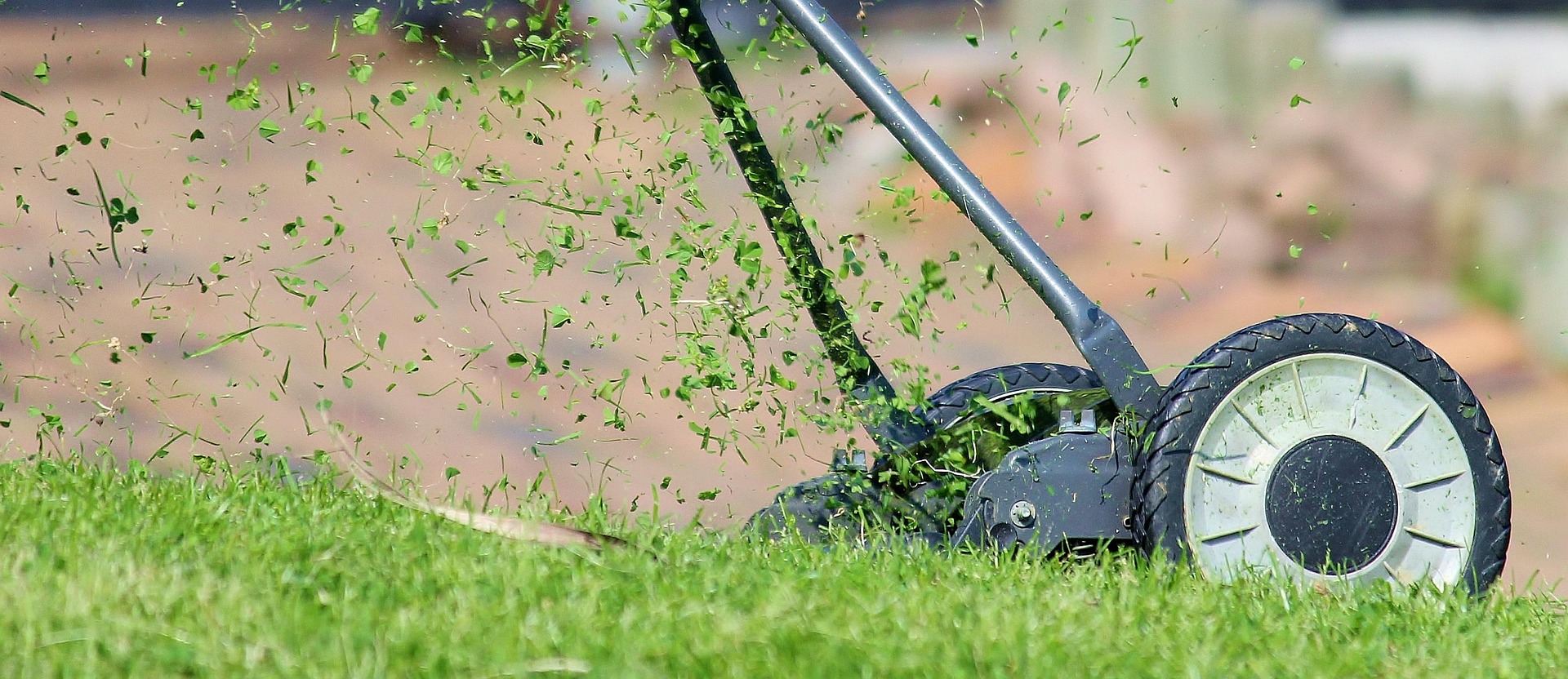
A dull mower blade tears grass instead of cutting it cleanly, leaving ragged edges that invite disease. Sharpen the blade before the first mow if you didn’t do it last fall.
Wait until grass is actively growing (not just green) before you start mowing. Then follow the one-third rule: Never cut more than one-third of the blade in a single pass. For most cool-season lawns, that means staying around 3–4 inches tall. Cutting too short weakens roots and gives weeds an opening.
7. Water Smart From the Start
Spring rainfall does most of the work in the early weeks, so hold off on running your irrigation system until conditions call for it. Watering too soon encourages shallow root growth.
The basic benchmark: About 1 inch of water per week during active growth, rain included. If your lawn starts looking blue-gray or footprints stay visible after you walk across it, it’s time to water.
8. A Quick Note on Aeration
Aeration, the act of pulling small plugs of soil from the lawn, relieves compaction and helps air, water, and nutrients reach roots. It’s worth doing, just not right now for most lawns. Cool-season grasses respond best to fall aeration. Warm-season grasses are better suited for late spring or early summer, once they’re fully out of dormancy. Note it on the calendar and move on.
Small Moves, Big Payoff
Work through this list in order—clean up, test, pre-emergent, fertilize, overseed, mow, water—and you’ll head into the growing season with a lawn that can largely take care of itself. The most common mistake is rushing. Soil temperature drives the key timing calls, not the calendar. Your local cooperative extension office can give you region-specific guidance, often for free.
A healthy lawn doesn’t need to be a perfect one. It just needs a solid start. A little effort now to prepare for spring is all it takes to set your lawn up for a full season of healthy growth.





Leave a Comment
Your email address will not be published. Required fields are marked *