Every product is independently selected. Things you buy through our links may earn us a commission.
If you want the best garden hose for everyday landscaping, start with the parts that control real performance: diameter, length, material, fittings, pressure rating, and storage. The right hose should move enough water to run your sprinkler, stay manageable around beds and shrubs, and survive repeated seasonal use without becoming a wrestling match.
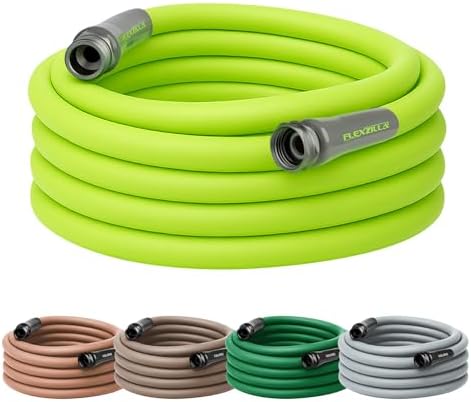
Our strongest all-around pick is the Flexzilla Garden Hose, 5/8 inch x 50 feet. Its hybrid polymer construction, flexible body, abrasion-resistant outer cover, and anodized aluminum fittings give it the right balance for most homeowners. It is not perfect for every property, but it is a smart starting point for standard watering, container gardens, flower beds, lawn care, and light outdoor cleanup.
1. Start With Your Actual Hose Run
Measure first. Shop second.
The most common mistake is buying a hose based on yard size instead of the distance between the spigot and the farthest point you need to reach. Walk the route with a tape measure or a length of string, follow the path around corners, and include the distance from the spigot to the ground-level watering point.
Add roughly 10-15 feet for movement. That extra length lets you reposition a sprinkler, reach behind a shrub, or water a container without pulling hard on the connection.
Avoid buying a 100-foot hose when a 50-foot hose handles the entire run. Every additional foot adds weight, storage bulk, and friction inside the tube. A shorter hose that reaches comfortably often delivers better water flow than an oversized hose that spends half its life coiled on the ground.
Typical Run | Practical Choice | Best Use |
|---|---|---|
Up to 25 feet | 25-foot hose | Patios, containers, small beds |
25-45 feet | 50-foot hose | Most front yards and backyard gardens |
45-65 feet | 75-foot hose | Larger suburban landscaping |
65-90 feet | 100-foot hose | Large yards and long outdoor runs |
If you need separate watering zones, two shorter hoses can be easier to handle than one very long hose. The trade-off is another connection point, which creates another place for leaks and flow restriction.
2. Choose 5/8 Inch For Everyday Flow
For most residential landscaping, 5/8 inch is the practical middle ground.
A 1/2-inch hose is lighter and easier to store, but its narrower interior limits flow more quickly, especially as the run gets longer. A 3/4-inch hose moves more water and reduces friction loss, but it is heavier, bulkier, and less pleasant to drag between plants.
A 5/8-inch hose balances usable flow with manageable weight. It works well for hand watering, garden wands, spray nozzles, sprinklers, washing outdoor furniture, and general yard maintenance.
The important detail is that the diameter refers to the hose's inside diameter, not its outside width. That interior measurement controls how much water can move through the tube.
Pressure Loss Is The Real Sprinkler Problem
When a sprinkler underperforms, homeowners often blame the sprinkler first. The more likely problem is pressure loss across the water path.
Your available outlet pressure gets reduced by several factors:
Outlet pressure minus hose friction minus elevation change minus fittings and restrictions equals pressure at the sprinkler.
Longer hoses create more friction. Smaller hoses create more friction. Sharp bends, partially closed spigots, clogged washers, quick-connect restrictions, and narrow sprinkler inlets reduce performance further.
That is why a sprinkler can throw a strong pattern near the spigot but produce a weak, uneven spray at the end of a long run. The source may still have adequate pressure, but the water has lost energy before it reaches the sprinkler.
A 5/8-inch hose handles typical home runs well. Move to 3/4 inch when you regularly run high-volume irrigation, fill large tanks, or push water across a long property where flow matters more than portability.
3. Compare Vinyl, Rubber, And Hybrid Polymer
Material determines how a hose feels, bends, stores, and ages.
Vinyl: Vinyl hoses are usually the cheapest option. They work for occasional, close-range jobs, but they tend to kink more easily, become stiff in cold weather, and degrade faster under repeated sun exposure. Choose vinyl when price and light weight matter more than long-term durability. For frequent landscaping, the lower purchase price can disappear quickly if the hose needs replacement every one or two seasons.
Rubber: Rubber hoses are known for durability and strong pressure tolerance. They can last for many years when cared for properly, but they are noticeably heavier, especially when full of water. Rubber makes sense for a stationary setup, workshop, or demanding use where weight is not a concern. For a homeowner moving a hose around raised beds and landscaping every day, that weight becomes a real drawback.
Hybrid polymer: Hybrid polymer hoses combine multiple layers to deliver flexibility, abrasion resistance, and lower weight than traditional rubber. The Flexzilla listing identifies its material as hybrid polymer and describes a hose that lays flat, coils easily, and resists kinking under pressure. That balance is why hybrid polymer is the strongest fit for most active home landscapes. You get a more durable feel than basic vinyl without committing to the full weight of a heavy rubber hose.
4. Read PSI And Burst Ratings Correctly
A hose's working pressure rating tells you the pressure it is designed to handle during normal operation. Burst pressure describes the much higher pressure at which the hose fails.
Most residential water systems operate around 40-80 PSI, though actual pressure varies by home and municipality. A 150 PSI working-pressure rating gives a meaningful cushion for normal outdoor use and pressure fluctuations.
Flexzilla's published guide lists its garden hoses at 150 PSI working pressure and approximately 600 PSI burst pressure. The ratio matters because a hose needs room for pressure spikes, heat, wear, and the stress created when a nozzle or valve closes suddenly.
Do not use a garden hose for a pressure-washer connection unless the hose is specifically rated for that job. Garden hoses and pressure-washer hoses operate in very different pressure ranges.
Also remember that a higher PSI rating does not automatically mean better watering performance. The hose's inside diameter and length have more influence on the flow reaching your sprinkler or nozzle.
5. Inspect Fittings, Threads, And Lead-In Connections
Hose bodies get attention, but fittings are where many failures begin.
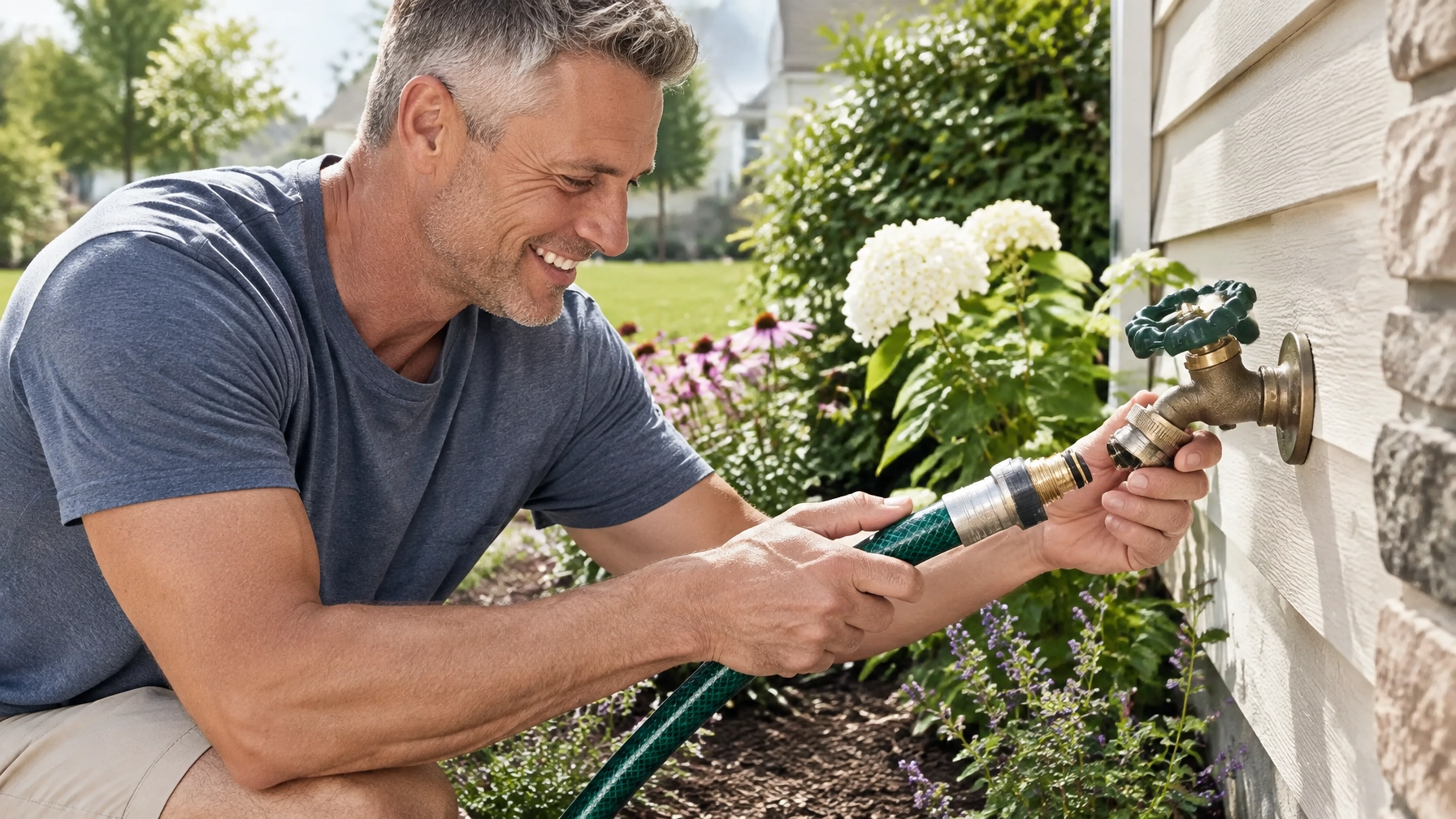
Look for sturdy male and female fittings, clean 3/4-inch garden hose threads, a properly seated washer or O-ring, and strain relief where the hose meets the connector. Thin fittings can bend, crush, corrode, or develop leaks after repeated attachment and removal.
The Flexzilla standard 50-foot model uses crush-resistant anodized aircraft aluminum fittings and a durable O-ring for the spigot connection. The SwivelGrip version adds rotating male and female grips, allowing the connector and hose to move independently while you tighten or unwind the hose.
That swivel action is especially useful when a hose reel or tight spigot connection causes twisting. It reduces strain at the connection point, although it does not make the hose immune to every kink. A hose can still fold if you drag it around a sharp corner or store it in a tangled pile.
What Lead-In Means
A lead-in hose is a short connector section that runs from the spigot to a hose reel, wall-mounted holder, or irrigation setup. It keeps the main hose from bending sharply at the faucet and makes the overall setup easier to manage.
For a lead-in, prioritize flexibility and a swivel connection. The short run is often bent more aggressively than the main hose, so a stiff connector can stress the spigot and fitting.
Lead-Free Compliance And Drinking-Water Labels
Drinking-water safe and lead-free are related, but they are not interchangeable marketing phrases.
Flexzilla product listings state that the hose is drinking-water safe. That label is relevant if you use the hose to fill a pet bowl, RV tank, or other potable-water container. However, the sources reviewed for this article did not establish an independent lead-free certification for every Flexzilla configuration.
If drinking water is a primary use, check the exact product packaging and current manufacturer documentation for the certification or compliance standard you require. Do not assume that aluminum fittings alone prove full potable-water compliance. Note that the Amazon listing also displays a California Proposition 65 warning.
For routine garden irrigation, this distinction is less central. For drinking, cooking, RV filling, or other potable uses, read the exact labeling carefully.
6. Consider Kink Resistance In Real Yard Conditions
Kink resistance is not just a convenience feature. A kink collapses the tube, restricts flow, and creates a stress point that can weaken the hose over time.
The strongest designs combine a flexible material, enough wall structure, and fittings that reduce twisting. Flexzilla's hybrid polymer body is designed to remain flexible across changing temperatures, while its zero-memory construction helps it lay flatter instead of aggressively springing back into tight coils.
Still, technique matters. Pull the hose out straight before turning sharply, avoid dragging it across rough edges, and do not leave it folded under a vehicle or lawn equipment. When watering around a corner, create a wide curve instead of forcing a 90-degree bend.
For a large property, the 100-foot Flexzilla SwivelGrip hose is the more capable choice. Its trade-off is obvious: a 100-foot hose carries more weight, occupies more storage space, and experiences more pressure loss than a 50-foot model.
7. Pick The Right Flexzilla Configuration
Here are the strongest use-case picks from the available Flexzilla lineup.
Best Overall: Flexzilla 5/8 Inch x 50 Feet
Shop the Flexzilla 5/8-inch x 50-foot hose.
This is the best starting point for most homeowners. It delivers standard 5/8-inch flow, manageable reach, hybrid polymer flexibility, a 150 PSI maximum pressure listing, and aluminum fittings.
Trade-offs: The standard version does not include a spray nozzle, and 50 feet may not cover a large yard. Customer feedback also shows mixed experiences with long-term durability and kink resistance, so proper storage and handling still matter.
Best For Long Runs: Flexzilla 5/8 Inch x 100 Feet With SwivelGrip
Shop the Flexzilla 5/8-inch x 100-foot SwivelGrip hose.
Choose this version when the distance from the spigot to your farthest bed genuinely requires it. The SwivelGrip ends make connections easier and help release twisting during use, while the 5/8-inch diameter preserves a practical balance between reach and handling.
Trade-offs: The long run creates more friction loss, so a sprinkler may have a weaker pattern than it would with a shorter hose. The hose is also heavier and more demanding to coil, particularly when full of water.
Best For Reel Connections: A Short Flexzilla Lead-In
A short lead-in is the cleanest choice when your main hose lives on a reel. It protects the faucet connection from repeated bending and keeps the reel from pulling directly against the spigot.
Trade-offs: A short connector adds another fitting and another possible leak point. Use quality washers, avoid cross-threading, and inspect the connection at the beginning of each season.
8. What Separates Good From Great
Use this checklist before you buy any hose:
Correct diameter: Choose 5/8 inch for most home landscaping and 3/4 inch for long, high-volume runs.
Correct length: Measure the real route and add only enough buffer to move comfortably.
Useful pressure rating: Look for a working-pressure rating that comfortably exceeds residential water pressure.
Durable construction: Hybrid polymer provides a strong middle ground between vinyl and rubber.
Strong fittings: Anodized aluminum or other durable fittings outperform thin stamped connectors.
Reliable sealing: A quality O-ring or washer prevents leaks at the spigot.
Kink management: Flexible material and swivel fittings reduce twisting, but smart handling still matters.
Clear water-use labeling: Drinking-water-safe claims should be checked against the exact configuration and your intended use.
Seasonal storage plan: Drain, coil, and protect the hose before freezing weather.
9. Store It Like You Want It To Last
Winter storage is not optional in freezing climates.
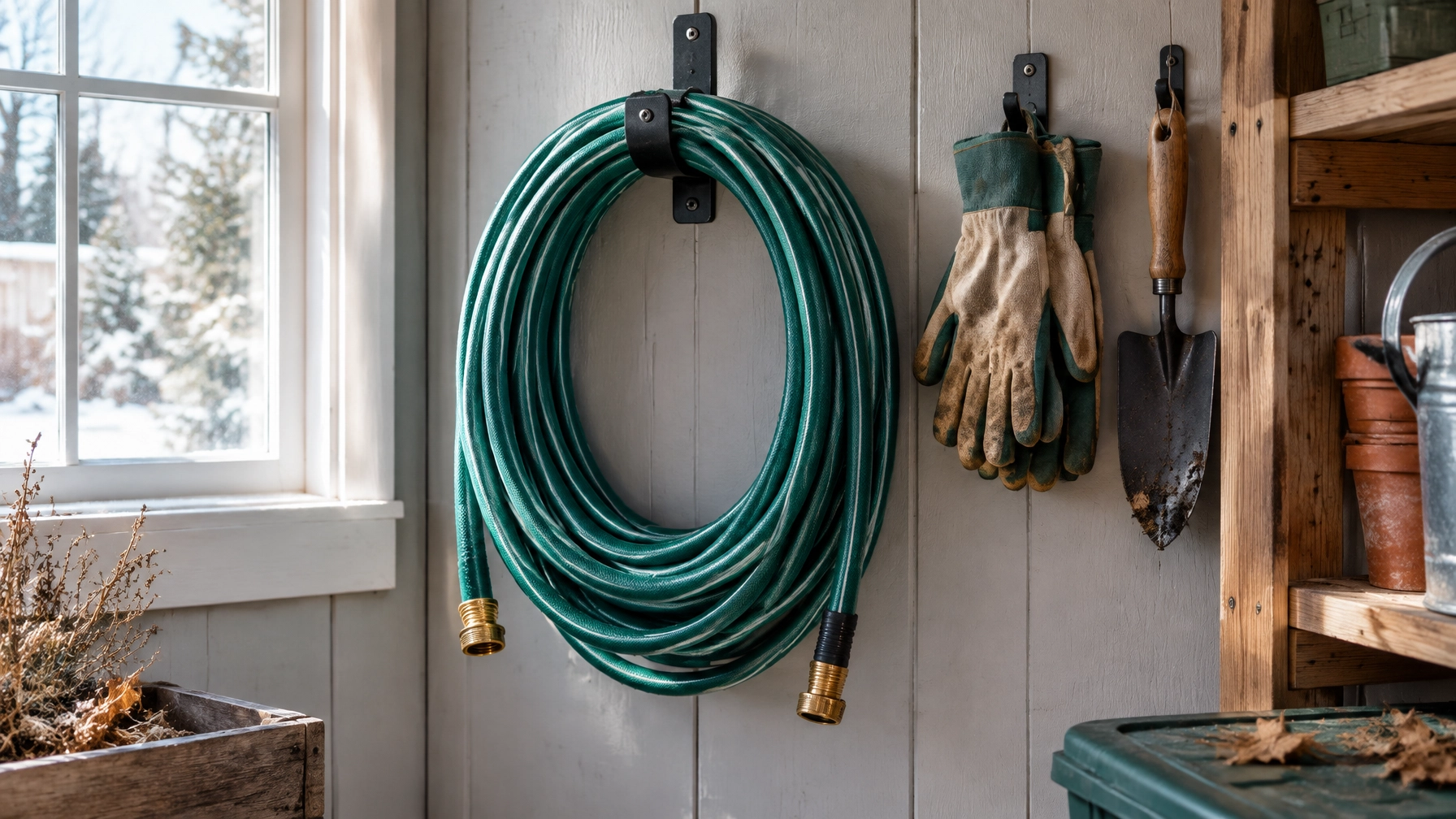
Disconnect the hose from the spigot, remove the nozzle or sprinkler, and drain the water completely. Water trapped inside can freeze, expand, and stress the inner tube and fittings.
Coil the hose in broad loops without sharp folds. Store it in a cool, dry location away from direct sunlight, standing water, chemicals, and heavy objects. Even a flexible all-weather hose benefits from being stored indoors during freezing conditions.
10. The Bottom Line
For most homeowners, the Flexzilla 5/8-inch x 50-foot hose is the right place to start. It delivers useful flow, manageable weight, flexible hybrid polymer construction, durable aluminum fittings, and enough pressure capacity for everyday landscaping.
Measure your route, keep the hose as short as practical, and move to 100 feet only when your yard demands it. Choose 3/4 inch when long-distance flow matters more than portability, and treat drinking-water labels and lead-free compliance as details to verify, not assumptions to make.
Whichever configuration you choose, the best garden hose is the one that fits your actual route, your water pressure, and the way you store it at the end of the season.


Leave a Comment
Your email address will not be published. Required fields are marked *