Every product is independently selected. Things you buy through our links may earn us a commission.
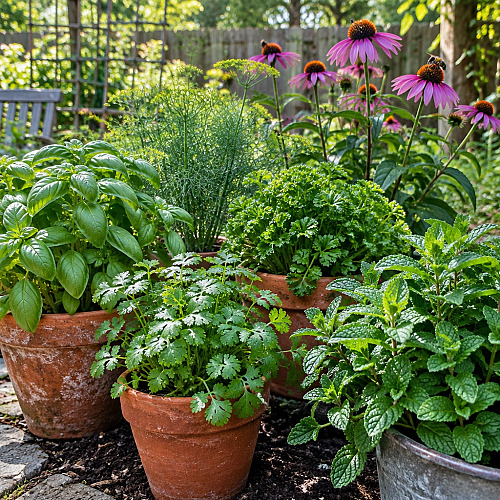
A productive garden can feed your kitchen and give bees, butterflies, and birds a reliable reason to visit. If you are searching for the best herb seeds for a kitchen garden, start with easy container herbs, add a perennial coneflower anchor, and plan your sowing dates around both harvests and blooms.
The goal is not a perfectly tidy garden. The goal is a garden that gives you basil for dinner, cilantro for salsa, dill for pickling, and flowers that keep pollinators moving through the yard. With the right seed choices and a few simple habits, you can build that system in containers, raised beds, or a small sunny corner.
1. Choose Seeds That Support The Whole Garden
Look for seeds labeled untreated, organic, or neonicotinoid-free when those options are available. Neonicotinoids are systemic insecticides that can move through plant tissues and expose pollinators through nectar and pollen. A neonicotinoid-free starting point keeps your garden aligned with its pollinator-friendly purpose.
You also want seed packets with clear information about:
Days to germination
Days to maturity
Recommended planting depth
Spacing and thinning
Indoor-starting or direct-sowing instructions
Whether the seed needs light or cold stratification
The supplied product research confirmed one Amazon collection that includes Italian basil, Italian parsley, cilantro, dill, mountain mint, peppermint, and purple coneflower: the Set of 25 Medicinal Herbs and Herbal Tea Garden Seed Collection. It is a practical way to cover the core planting list, although a mixed collection gives you less control over cultivar selection and individual packet quantities.
2. Rank Plants By Garden Job
These are not just ranked by flavor. They are ranked by how well each plant combines kitchen value, pollinator value, and beginner-friendly growing habits.
1. Basil: Best Warm-Season Starter
Basil earns the top spot because it is fast, useful, and highly productive in containers. Start it indoors about 4-6 weeks before your last frost, or direct-sow after the soil has warmed and all frost danger has passed.
Basil needs warmth, bright light, and consistent moisture. Seedlings become leggy when they sit in a dim window, so place them under a strong grow light or in the brightest available location. Space plants about 8-12 inches apart, depending on the mature size listed on the packet.
The tradeoff is that regular harvesting delays flowering. That is excellent for leaf production but less useful for pollinators. Grow an extra plant or two and let those flower. You will still have plenty of leaves, while bees get access to the flower spikes.
2. Cilantro: Best Cool-Season Succession Crop
Cilantro grows quickly in cool weather and bolts when heat arrives. Direct-sow it rather than transplanting it whenever possible, because cilantro dislikes root disturbance.
Sow a small patch every 2-3 weeks during the cool part of spring. Make a second round in late summer for a fall harvest. Space seedlings about 2-4 inches apart for leaf production, with wider spacing if you want larger plants and more flowers.
The tradeoff is its short leafy window. Once cilantro bolts, the leaves become less tender and the plant shifts toward flowers and seed. That is not a failure. Let some plants bloom for small bees and beneficial insects, then collect the coriander seeds for cooking or next season's planting.
3. Dill: Best Bridge Between Kitchen And Wildlife
Dill is a strong choice when you want one plant to serve several jobs. Its leaves and seeds are useful in the kitchen, its flower umbels attract pollinators, and its foliage can support swallowtail butterfly caterpillars.
Direct-sow dill after the soil is workable and continue sowing every 3 weeks during the productive season. Give plants roughly 8-12 inches of space, or follow the thinning range on your packet. Dill has a taproot, so moving established seedlings is usually more trouble than it is worth.
The tradeoff is that caterpillars can make the foliage look rough. If you are growing dill for wildlife, expect some chewing. Plant an extra row so you can harvest from one group and leave another group for caterpillars and flowers.
4. Parsley: Best Long-Game Herb
Parsley is slower to germinate than basil, cilantro, or dill, but it rewards patience with a long harvest window. Start it indoors 4-6 weeks before the last frost, or direct-sow when the soil is workable. Keep the seedbed evenly moist while you wait.
Parsley generally performs well with 8-10 inches of space. Flat-leaf parsley offers a stronger culinary presence, while curled parsley gives you a compact, textured plant for containers.
The tradeoff is that parsley is biennial. It focuses on leaves during its first year and sends up flower stalks in its second year. Leave at least one plant in place to flower. Those blooms provide nectar, and the plant can become an important host resource for swallowtail caterpillars.
5. Mint: Best Pollinator Magnet For A Dedicated Pot
Mint is generous to a fault. It produces aromatic leaves for tea, sauces, and drinks, and its flowers are attractive to bees. It also spreads aggressively through underground stems when planted directly in the ground.
Give mint its own container. A pot at least 12 inches wide gives the roots room while keeping the plant from taking over nearby beds. Place the container where it gets bright light and regular water. If you plant multiple mint varieties, use separate pots so they do not crowd one another.
The tradeoff is simple: mint is easy to grow but difficult to contain once established in open soil. A dedicated pot turns that problem into a manageable growing system.
6. Coneflower: Best Perennial Pollinator Anchor
Purple coneflower, or Echinacea, brings long-lasting blooms, strong visual structure, and late-season seed heads for birds. It is not a kitchen herb, but it belongs in a pollinator-friendly kitchen garden because it keeps the garden productive after many annual herbs have slowed down.
Coneflower prefers full sun and well-drained soil. Give mature plants approximately 18-24 inches of space, depending on the variety. It takes patience from seed, but the payoff is a perennial planting that returns for years.
The tradeoff is that coneflower is not an instant result. Germination can be uneven, and plants often need a full season to establish before delivering their strongest display.
3. Compare The Best Starting Method
Plant | Best Starting Method | Light And Germination Notes | Main Tradeoff |
|---|---|---|---|
Basil | Start indoors or direct-sow after frost | Warm soil, bright light, usually quick to emerge | Cold slows or kills seedlings |
Cilantro | Direct-sow | Cool conditions support leaf production; bolts in heat | Does not transplant well |
Dill | Direct-sow | Bright light and evenly moist soil support fast growth | Taproot makes transplanting difficult |
Parsley | Start indoors or direct-sow | Slow germination; keep seedbed moist and be patient | Takes longer to establish |
Mint | Start indoors or direct-sow in a container | Bright light and regular moisture improve growth | Spreads aggressively in open ground |
Coneflower | Winter sow, fall sow, or start indoors after stratification | Lightly press seed into the surface; germination can take 2-4 weeks after stratification | Slow, uneven establishment |
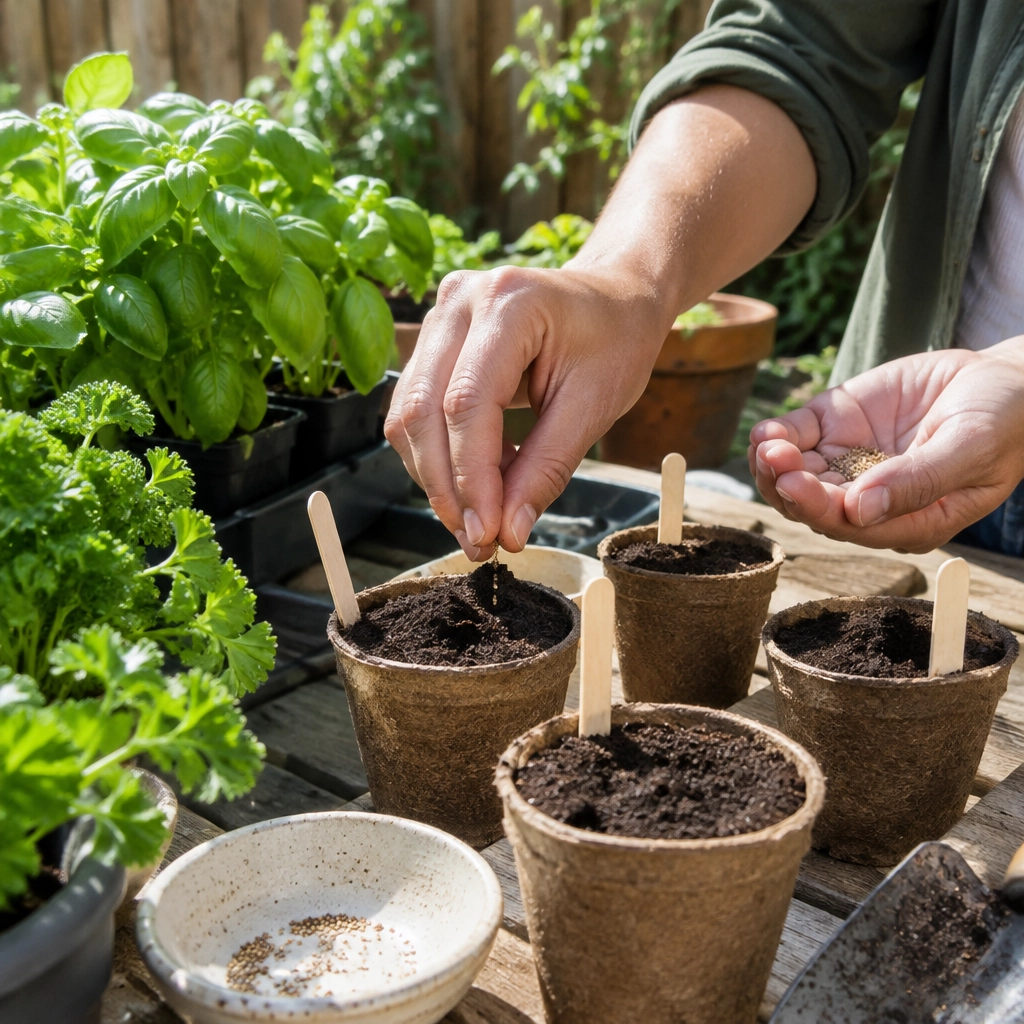
4. Start Seeds Indoors Without Creating Weak Seedlings
Indoor starting gives basil, parsley, and coneflower a useful head start. Use clean containers with drainage and a fine seed-starting medium. Sow each seed at the depth listed on its packet. Seeds that need light should be pressed into the surface or covered only lightly.
Place seedlings under a grow light for 14-16 hours per day, keeping the light close enough to prevent stretching. A bright window can work, but direct indoor light is often weaker than it appears. Rotate containers regularly so seedlings grow evenly.
Water from the bottom when possible, and avoid keeping the medium saturated. Constantly wet soil encourages weak roots and fungal problems. Once seedlings have their first true leaves, thin crowded starts so each plant has access to light and airflow.
Before moving indoor seedlings outdoors, harden them off over 7-10 days. Set them outside in a sheltered, shaded location for a few hours at first. Increase outdoor time gradually, then introduce stronger sunlight. Do not move tender basil outside until nighttime temperatures remain reliably warm.
5. Give Coneflower The Winter Signal
Coneflower seed often benefits from cold, moist stratification. This process mimics the winter conditions that help break seed dormancy. Purple coneflower can germinate without stratification in some conditions, but a short cold period often improves uniformity.
For refrigerator stratification:
Moisten a small amount of sand, vermiculite, or seed-starting medium.
Mix in the seeds and place everything in a labeled sealed bag or container.
Refrigerate at approximately 34-40 degrees Fahrenheit for about 4-6 weeks.
Check occasionally to ensure the medium stays moist, not soggy.
Sow the seeds promptly after the cold period.
Coneflower seeds need light to germinate, so press them onto the surface and cover them only with a very thin layer if the packet recommends it. Keep the surface evenly moist and provide bright light after sowing.
Winter sowing offers an easier outdoor alternative. Sow the seeds in a protected container in late winter, or direct-sow them in a prepared bed in late fall. Natural cold and moisture provide the stratification. When spring arrives, watch for seedlings and protect them from drying out.
6. Build Harvests And Blooms In Waves
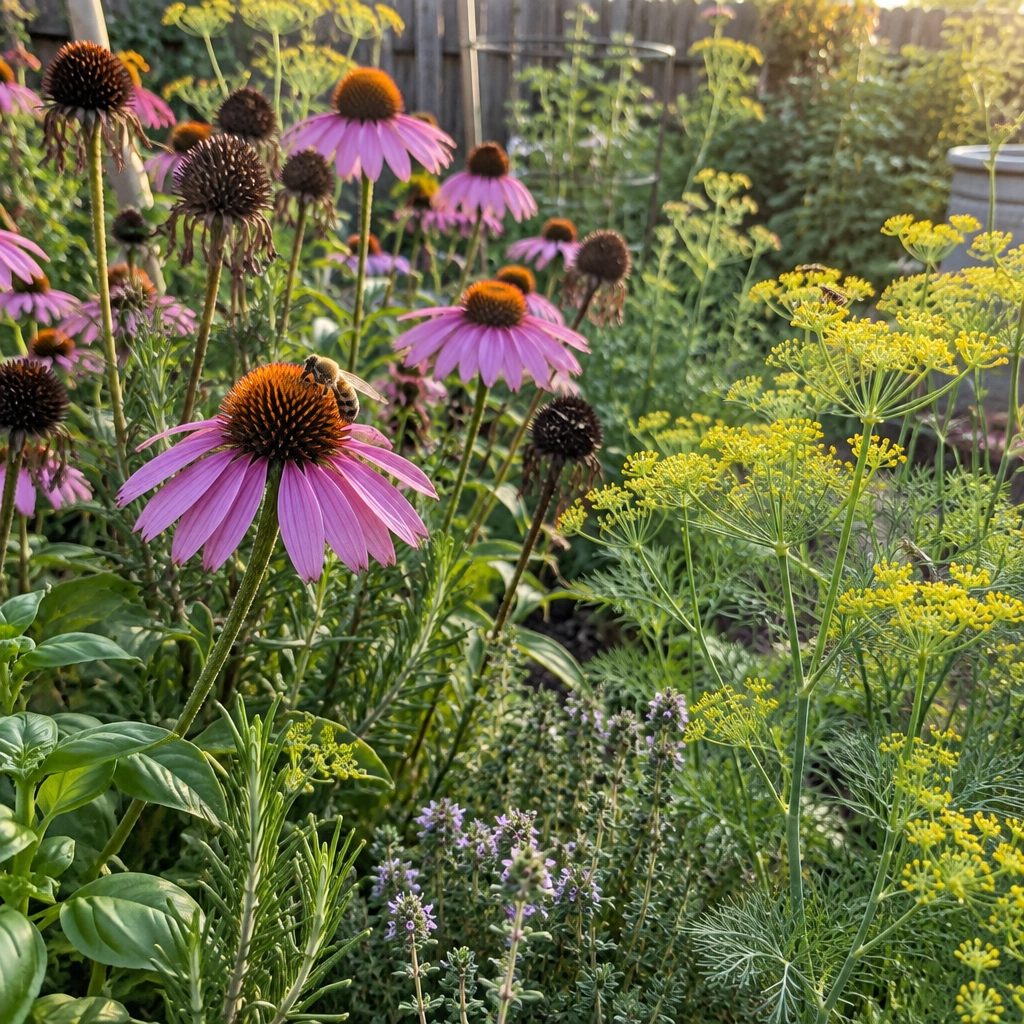
A pollinator-friendly kitchen garden works best when you stagger plantings instead of sowing everything on one weekend.
Start basil and parsley indoors for an early harvest. Direct-sow cilantro and dill in small batches. When the first cilantro crop begins to bolt, another younger crop should be coming along. When one dill planting begins to flower, the next planting can supply fresh leaves.
Let some herbs bloom intentionally. A useful layout might include:
Basil plants reserved for leaf harvest
Basil plants allowed to flower
A cilantro row for leaves and a second row for flowers
Dill planted in two or three succession blocks
Parsley left in place through its second year
Mint flowering in its own container
Coneflower grouped in a sunny perennial section
Grouping flowers makes them easier for pollinators to find. Keep the garden free of dense overcrowding, but do not space every plant so far apart that blooms become isolated.
7. Protect Pollinators By Skipping Pesticides Near Blooms
The most reliable pollinator protection is prevention. Start with healthy soil, good airflow, appropriate spacing, hand-picking, damaged-leaf removal, physical barriers, and regular observation. Many small pest problems do not require chemical control.
Avoid pesticide use on and around blooming plants. Never spray a blooming plant while bees or other pollinators are foraging. If a pesticide becomes absolutely necessary, use it only according to the label and never apply it to blooming plants where bees are active.
This rule applies even to products marketed as natural or gentle. Follow the label, check pollinator warnings, and choose the least disruptive approach. University extension guidance on herbs for pollinator gardens recommends avoiding pesticides whenever possible and notes that flowering herbs can serve as valuable nectar sources.
Neonicotinoid-free gardening also matters at the seed stage. Check labels and supplier information before buying treated seed or nursery plants. When the goal is a garden for pollinators, avoid introducing systemic insecticides at the beginning.
8. Leave Seed Heads For Winter Wildlife
Do not cut every spent flower as soon as it fades. Coneflower seed heads provide food for birds in fall and winter, while standing stems offer shelter for insects. Leaving some dried herb stalks in place also creates a more useful habitat than clearing the entire garden immediately.
You can tidy paths and remove diseased material, but leave healthy coneflower stems standing until late winter or early spring. Cut them back when new growth begins. This timing protects overwintering insects and keeps seed available during the coldest months.
A slightly untidy garden is not a neglected garden. It is a working habitat.
9. What Separates Good From Great
A good seed selection grows edible herbs. A great one creates a repeatable garden system.
Look for these criteria:
Kitchen value: Choose herbs you actually use, not just herbs that look appealing on a seed rack.
Pollinator value: Reserve some plants for flowers instead of harvesting every leaf.
Seasonal range: Combine cool-season cilantro with warm-season basil and long-lived coneflower.
Container control: Keep mint in its own pot and give each plant enough room for airflow.
Reliable timing: Use indoor starts, direct sowing, stratification, and succession sowing for their specific strengths.
Seed transparency: Favor untreated or clearly neonicotinoid-free seed when available.
Wildlife planning: Leave coneflower seed heads standing and tolerate some caterpillar damage on dill and parsley.
The strongest garden is not the one with the most varieties. It is the one that produces food, flowers, and habitat without demanding constant correction.
10. Build A Better Kitchen Garden From Seed
Start with basil for quick confidence, cilantro and dill for succession sowing, parsley for the long game, mint in a dedicated pot, and coneflower for perennial pollinator power. That combination gives you useful harvests now and a stronger wildlife garden over time.
The best herb seeds for a kitchen garden are the ones that match your meals, your growing conditions, and your willingness to share part of the harvest with pollinators. Sow in waves, let selected plants bloom, avoid pesticides near flowers, and leave healthy seed heads standing through winter. Your garden will be more productive, more resilient, and far more alive.


Leave a Comment
Your email address will not be published. Required fields are marked *